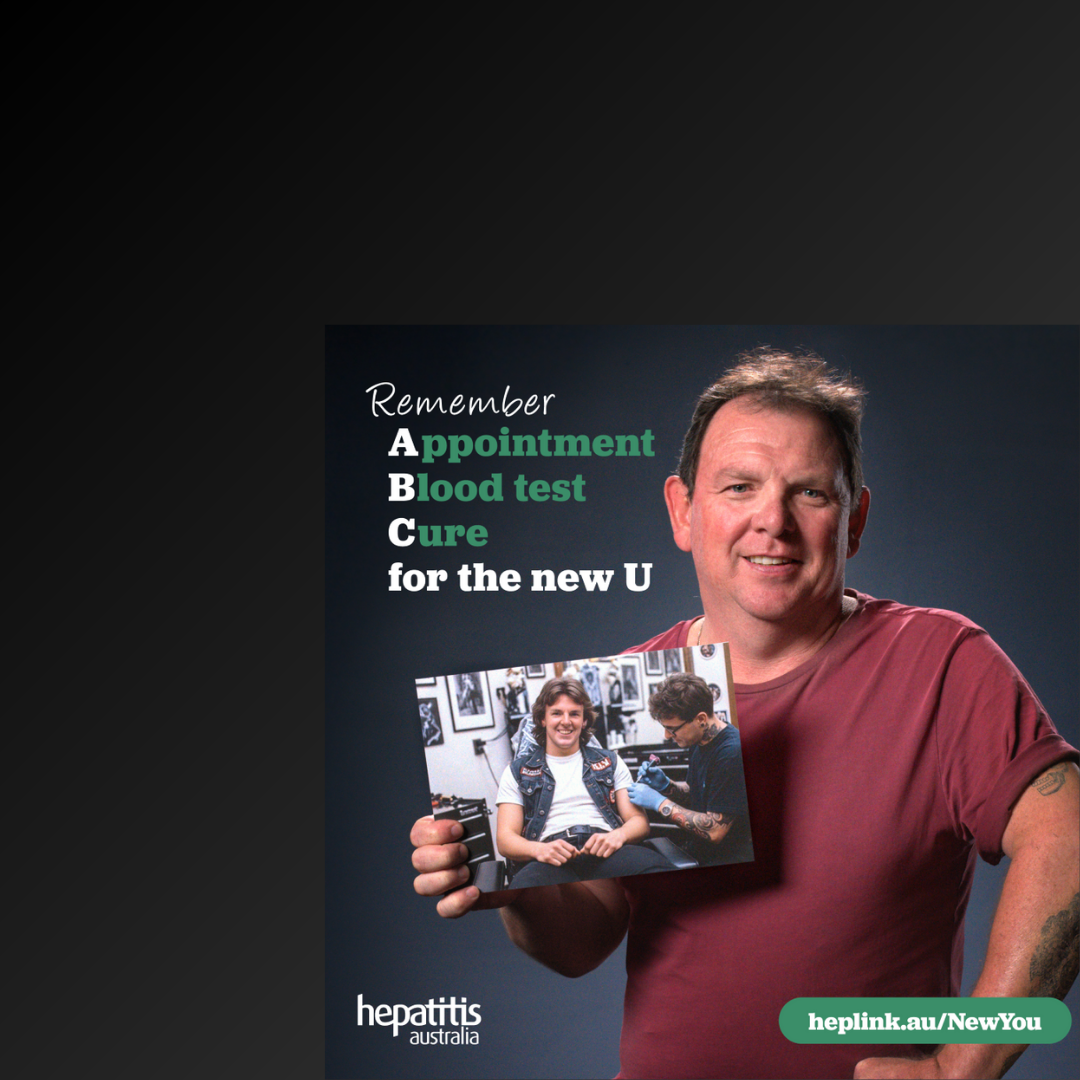
Hepatitis Australia, in collaboration with TasCAHRD, Hepatitis NSW, Hepatitis Queensland, and project partners The Burnet Institute, ASHM, and the Centre for Social Research in Health at the University of New South Wales, is launching a new pilot hepatitis C campaign targeting people at risk of hepatitis C who do not currently inject drugs.
The campaign will run from Monday 10th November to Friday 12th December 2025. This digital advertising campaign targeting males aged over 45 years will be visible across Youtube, Facebook, lnstagram, and various websites.
The campaign will be active in the following locations:
- Hobart
- Launceston
- Central & Eastern Sydney
- South Western Sydney
- Newcastle
- Gold Coast
- Brisbane North
- Toowoomba
Campaign relaunch
The Pilot Hepatitis C Campaign was relaunched in 2026, building on the original campaign and continuing to target people who may be at risk of hepatitis C but do not currently inject drugs.
The relaunch retains the campaign's focus on challenging misconceptions about hepatitis C and encouraging people to consider testing. It also places greater emphasis on access to hepatitis C care through HepLink's telehealth service, providing an accessible pathway for people who may not otherwise engage with traditional hepatitis C services.
Through HepLink's telehealth service, eligible people can access hepatitis C care remotely, helping to reduce barriers such as stigma, geographic location and difficulty accessing services.
The relaunch therefore aims not only to increase awareness and encourage people to consider hepatitis C testing, but also to make it easier for people to take the next step towards care and treatment.
About hepatitis C
At the end of 2023, there were 68,890 people living with hepatitis C in Australia. While hepatitis C is commonly understood as a condition impacting people who inject drugs, 84% of people living with hepatitis C in Australia no longer inject drugs or contracted hepatitis C in other ways.
Stigma and discrimination associated with injecting drug use can create a barrier for all people living with hepatitis C in accessing treatment. People who do not currently inject drugs are less likely to be engaged in services, such as needle and syringe programs, with hepatitis C as core business and are therefore less likely to access information about testing and antiviral cures.
Further, the perception of health professionals that hepatitis C is associated with injecting drug use likely influences decisions to test for hepatitis C, thereby delaying diagnosis. Research shows that people who are diagnosed late with hepatitis C following a liver cancer diagnosis, have had extensive health system contact in the 10 years prior, including GP visits and blood tests.
All Australian Governments have committed to the global goal to eliminate hepatitis C as a public health threat by 2030. Australia must target unreached populations to achieve this goal.
Support the campaign
You can amplify the impact of this campaign by supporting the dissemination of campaign materials and resources. You can find all relevant social media content here:
Pilot Hepatitis C Campaign - National
You can also visit the campaign page on HepLink.au/NewYou.
If you would like further information regarding the hepatitis C campaign, email [email protected].
For further information regarding hepatitis C in general, please contact HepLink Australia on 1800 437 222. HepLink is the national 'front door' to viral hepatitis support, treatment and care, with a dedicated Nurse Navigator who can provide information, referral and linkage support. HepLink's telehealth service also provides an accessible pathway to hepatitis C care for eligible people, including those who may face barriers to accessing traditional services.