What is hepatitis D?
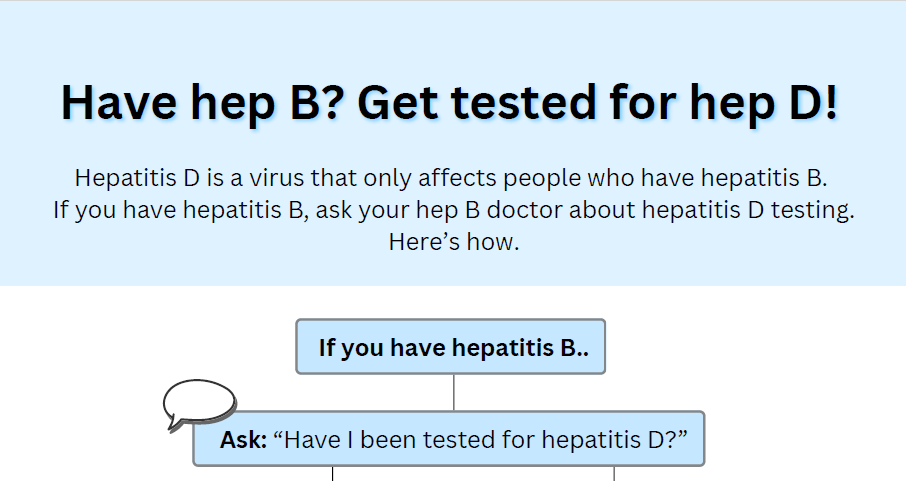
- You can only get hepatitis D if you have hepatitis B. It can make your liver disease worse.
- Hepatitis B does not “become” hepatitis D. Hepatitis D is a different virus that needs hepatitis B to exist.
- Hepatitis D spreads through blood-to-blood contact.
- Other names for hepatitis D are Hepatitis Delta or HDV.
- Everyone with hepatitis B should get tested for hepatitis D at least once.
- If you have hepatitis D you should get regular check-ups with a specialist liver doctor.
Hepatitis D is a serious health condition, but there are things you can do to live well. There is support available.
Hepatitis D is a virus that affects the liver. You can only get it if you also have hepatitis B. This is because the hepatitis D virus needs the hepatitis B virus to survive in the body. It is spread when blood infected with the hepatitis D virus gets into your blood.
Hepatitis D can be found all around the world, but it’s more common in some regions than others. Hepatitis D is not common in Australia.
Transmission
Sometimes you can get infected with hepatitis B and D at the same time. This is called a co-infection. If you have hepatitis B for a long time and get infected with the hepatitis D virus, that is called a superinfection. You can read more about it in our FAQ - "Will I have hepatitis D for life?".
Liver disease
When someone has both hepatitis B and hepatitis D, it can make the liver illness more serious. Over time, this can lead to long-term liver problems, such as scarring of the liver (cirrhosis), liver failure or liver cancer.
Prevention
Hepatitis D can be prevented by getting the hepatitis B vaccine. But if you already have hepatitis B, there’s no vaccine that can prevent hepatitis D. But there is medicine that can help if you get hepatitis D.
Testing and treatment
For people who already have hepatitis B, testing can help detect hepatitis D early. If you have hepatitis D, regular check-ups are important, and treatments are available to help manage the infection and protect the liver.
Learn more about what to do after diagnosis
Get support
If you have questions about hepatitis D, you can call HepLink for free on 1800 437 222. It is free to call, and you do not need a Medicare card.
This page was developed with grant funding from Gilead Sciences.